Literature Review
LRT vs. BRT Overview:
LRT is an electric rail system with high capacity but high infrastructure and maintenance costs. Light Rail Transit (LRT) is a public rail transport system typically distinguished by fixed guideways, greater capacity for passengers, and higher costs of construction.
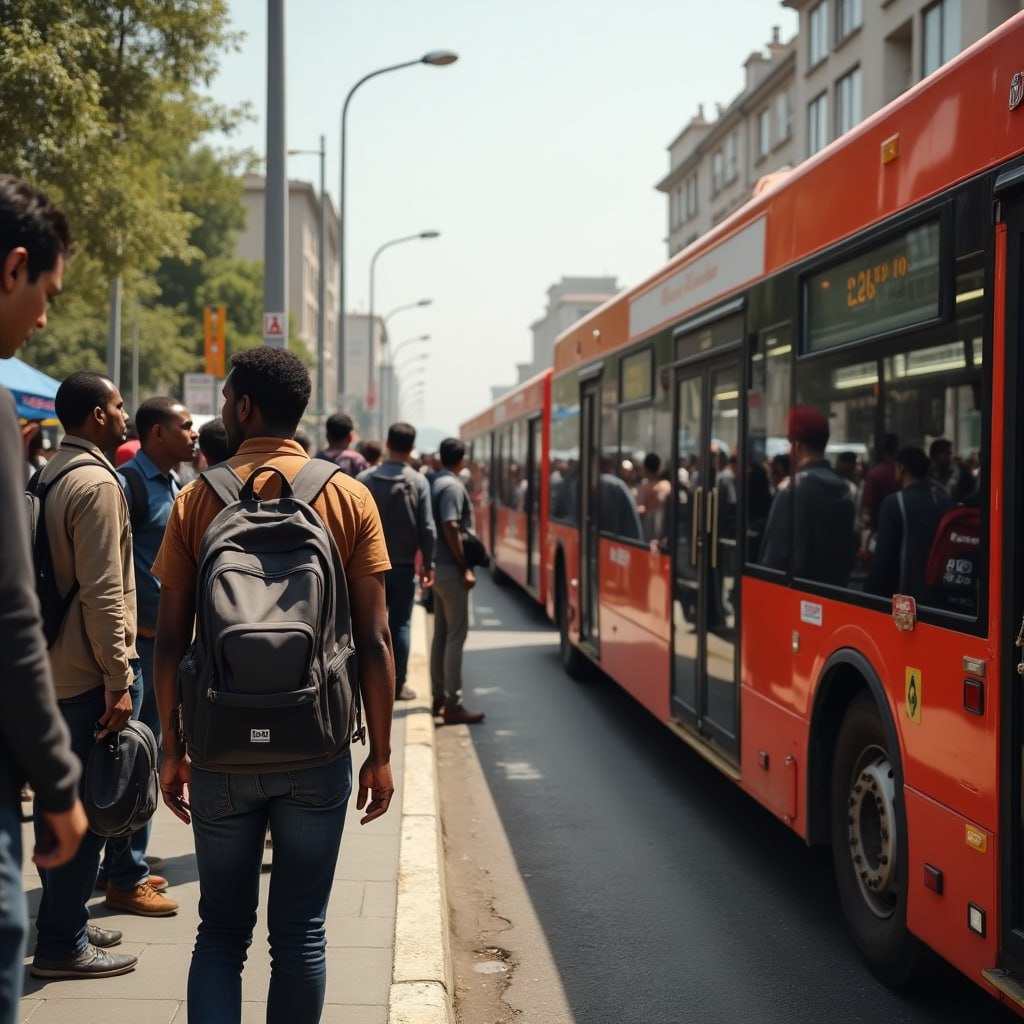
BRT offers similar service levels using buses on dedicated lanes at lower cost and greater flexibility. BRT schemes are flexible and scalable; they can be rolled out in phases and scaled up as passenger demand or opportunities for funding change.
Cost and Infrastructure:
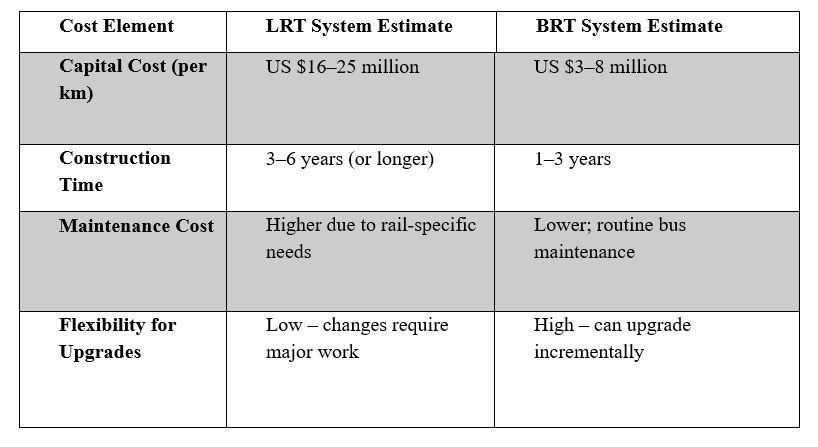
LRT costs about $16–25 million/km and takes longer to build. BRT costs $3–8 million/km and can be deployed faster.
Operational Performance:
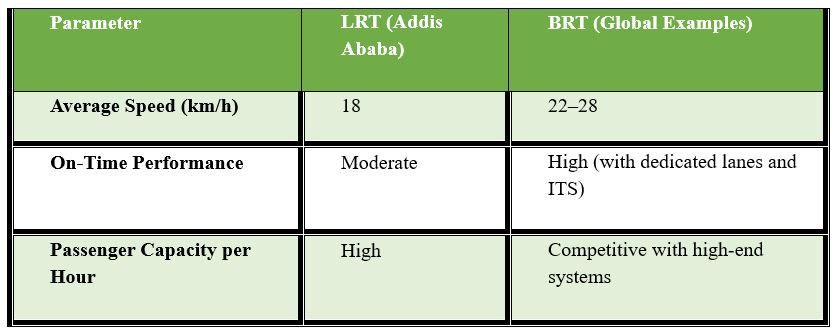
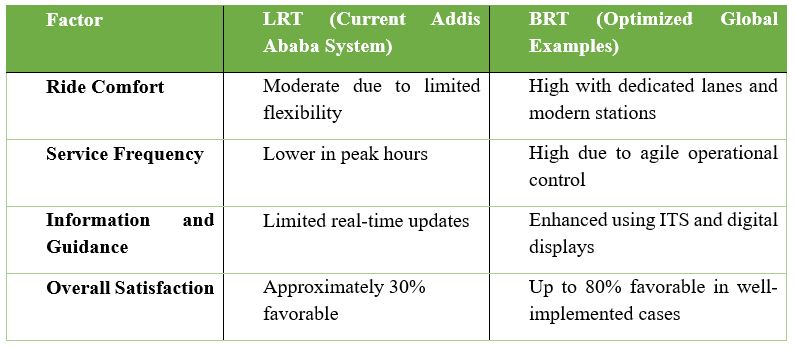
BRT often matches or exceeds LRT in speed and frequency, especially when integrated with Intelligent Transport Systems (ITS) in other countries case study. For instance, research from cities such as Bogotá demonstrates that BRT can maintain average speeds that rival those of rail systems by avoiding traffic congestion.
User Satisfaction:
Studies show higher satisfaction with BRT due to frequency, comfort, and speed. LRT systems in Addis Ababa face overcrowding and unreliable schedules.
Lessons and Examples from Around the World on BRT Systems:
Global experiences show that BRT systems can be very flexible, allowing cities to make gradual improvements as needed. This adaptability helps meet changing passenger demands, financial situations, and political support.
Success Stories
- Lahore, Pakistan: The BRT there has boosted the local economy, attracting significant investment and transforming urban areas into commercial hubs. It demonstrates how BRT can encourage urban growth and private investment.
- Bogotá, Colombia: Bogotá’s Trans Milenio is known for its dedicated lanes, modern technology, and high-frequency service, leading to faster travel times and satisfied users.
- Nairobi, Kenya: Well-implemented BRT systems in Nairobi have gained high approval from users, often outperforming traditional transit options in satisfaction levels.
Challenges and Barriers
- Jakarta, Indonesia: Despite being innovative, Jakarta’s BRT has seen a decline in ridership due to low service quality, weak institutional support, and infrastructure issues. Continuous improvements and strong management are essential.
- Operational Challenges: Many developing cities face problems like poor maintenance and lack of advanced technology, which can hinder system efficiency. Addressing these issues early on is key to success.
Understanding Transit Use in Addis Ababa: LRT vs. Informal Systems
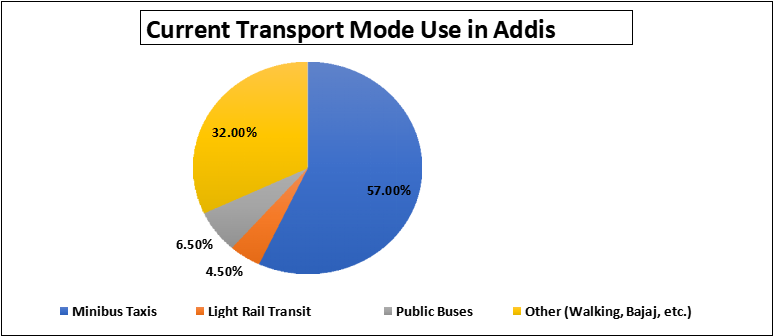
Transport in Addis Ababa is made up of various types of vehicles. The most used are minibus taxis, which account for about 57% of trips. Public buses are used by around 6.5%, while the Light Rail Transit (LRT) serves approximately 4.5% of commuters. Additionally, about 32% rely on informal options like walking, private cars, or motorcycles, mainly for short distances or areas with limited service.